23 September 2015

Ennu Ninte Moideen

It is believed that tragic love stories have more power to stay in the memory than the successful ones where the lovers walk away into the sunset with their hand in hand. Débutante director R S Vimal seems to be aware of this fact so, he has made a love story inspired by real life yet have ingredients that will make any director rub his hands with glee. It is based in an era when let alone inter religious marriages even talking to your spouse in front of elders was considered a taboo. Now, imagine in such a scenario two rebellious youngsters from different religions not only fall in love but are even adamant to unite come what may.

Ennu Ninte Moideen tells the story of Moideen (Prithviraj) and Kanchanamala (Parvathy), who are family friends till the cupid’s arrow strikes. Moideen is a zealous youth wearing socialist ideals on his sleeves preaching that ‘India is not Indira and Indira is not India’ while his father (Sai Kumar) is a staunch Congressman with an unflinching loyalty towards the Nehru-Gandhi family, which gives the director a chance to have some comical interludes in the beginning.

On the other hand, Kanchanamala is shown to be leading a revolt against hostel management for the disparity in the quality of food given to the students according to their economic status.

As the story moves forwards the intensity of emotions and violence increases making us ask where will all this take us? But, the lovers keep the hope and humour alive in their communication (by whatever means they can).

We see that these two lovers have provided ample fodder for the film makers in the past or is the other way round where director Vimal got influenced by love stories made in the last couple of decades and incorporated them in his screenplay? We cannot be sure of that.

He has claimed that he did not take any cinematic liberties as this story of the lovers in itself was very interesting that it did not require any mending. But, some situations and dialogues mouthed by the stars make it hard to believe the director’s claim maybe that is why they say that fact is stranger than fiction.

Prithviraj does succeed giving Moideen’s character a ‘larger than life’ aura yet displays vulnerability of a lost lover in his private moments. It is difficult say if the character benefitted by the presence of Prithviraj or was it the actor who gained by portraying such a character.
Parvathy does not have to try very hard to make us believe that she the feisty Kanchanamala, be it for her resolve to face the odds in her chosen path or being the girl who is full of life in the beginning.
Jomon T John’s camerawork provides the gloomy ambience for the doomed love story capturing the cloudy sky when the action is outdoors or shooting indoors with pale lightings.

It all make Ennu Ninte Moideen worthwhile effort that we can savour.

As it appeared in Rediff.

03 September 2015

Kunjiramayanam

These days we see a lot of young blood being infused in malayalam cinema and it is trying to tweak the formula or to make a new grammar or narrative style that the audience will find novel or refreshing. The youngster Basil Joseph tries to do the same in his début feature film Kunjiramayanam . He has cast the two progenies of actor Sreenivasan namely Vineeth and his brother Dhyan Sreenivasan. It tells the story of fictitious village called Desam. The citizens of this village are dumb and do not take much time to believe in any kind of superstition.

Kunjiraman [Vineeth Sreenivasan] and Lalu [Dhyan Sreenivasan ] are first cousins. Lalu is the son of Well Done Vasu [Mammukoya] who has made his fortune by working in the Gulf. Kunjiraman is his sister’s son, whose marriage is fixed with Vasu’s daughter Thankamani. But a small issue between the boys takes the proportion of a family feud and the marriage is called off. Kunjiraman takes off to Dubai after that. Lalu, who is the apple of Vasu’s eyes is a dimwitted fellow who is finding it difficult to even pass the tenth standard exam even after appearing for it many times.

We see that Kunjiraman’s marriage is fixed with the character played by Srinda. And at the time of engagement the bride to be takes a promise from kunjiraman that he won’t touch alcohol from now on. So, before returning to the call of duty he symbolically breaks a bottle of the brand of alcohol he had started drinking with. But after he has left for the Gulf it comes to light that his favourite drink has become jinxed nobody can bring it into the village. Thus this superstition spreads like wild fire and anyone daring to get it into the village has to face dire consequences.

The unfolding of these events takes a lot of time served with dollops of humour with actors like Aju Varghese, Neeraj Madhav and Deepak Parambol with Dhyan being at the forefront with the sub plots like Lalu’s numerous attempts to succeed in the tenth standard exams and he being under the wings of cut piece Kuttan (Aju Varghese) for learning to stitch garments and essential things in life. And, etching out the characters of cut piece Kuttan and Vasu does take some time.

There are a few inside jokes and subtexts if we give it a thought like the mention of Oru Thundu Padam in Biju Menon’s narration in the beginning, which is the title of a short film that director Basil Joseph had made a few years back. Now, coming to the subtexts, the siblings Vineeth and Dhyan seems to be making a statement for their father Sreenivasan in Malayalam cinema, who was always cast as a sidekick of a good looking hero and became the butt of the joke. Here Vineeth who resembles his father is made smarter, confident and more successful while the good looking Dhyan with his gym toned biceps is made a dimwitted person.


These are the things that keep us interested in proceedings which tend to get repetitive once in a while in an effort to justice to a pantheon of characters. And, we can confidently say that this is the thing that makes Kunjiramayanam a time pass film.

As it appeared in Rediff.

22 August 2015

Loham

We had seen a large haul of gold smuggled from the Gulf countries being caught across the airports in Kerala, some time back. There were many conspiracy theories doing rounds, stories of hapless carriers and the names of big fishes doubted to be involved in this precarious business were thrown around. All these things make good fodder for a masala film. And, who better to do it than director Ranjith. So, Loham - The Yellow Metal, written and directed by Ranjith with Mohanlal in the lead carried the heavy burden of expectations being an Onam release. But, sorrily it fails to deliver on those expectations.

We begin with the arrival of human remains of a young man in Karipur airport, this man had died in an accident at a construction site in Dubai. And, none other the local MLA, played by Hareesh Perady had come to the airport to expedite the customs clearance of this body. The back story of the young man portrayed by Musthafa with the Malabar backdrop playing a significant role in it and the song Kanaka Mylanchi that has topped the charts for the last few days featuring here.

Next we see Jayanthi Ramesh (Andrea Jeremiah) landing in Kochi. Here Mohanlal enters as her cab driver Raju, he is talkative and bubbly to the boot. But, she is the silent sort and it is obvious from her body language that something serious is going on in her head. She has come here to find the whereabouts of her husband Ramesh (Ashvin A. Mathew), the customs officer who has gone missing after clearing the dead body of the youth in the Karipur airport a few days back.

Numerous other characters make an appearance as Jayanthi and Raju drive around the city adding to the thickness and the mystery of the plot. It feels as if the director is deliberately on the simmering point in the first half relying on Mohanlal’s comic prowess and we sit expectantly for the narrative to explode with vigour and wit. But, it never comes to the boiling point and the excitement that was anticipated never comes to the fore. Things just fizzle out without providing us any real thrills.

As we go along it is revealed that the coffin of the young man had 100 kilos of gold hidden in it, which has gone missing while the body was delivered at his home. And, everyone around is after that without the distinction of being a good guy or a bad guy. Then there many twist and turns in this tale that are not original or interesting.

There is an endless list of characters making an appearance in the frame and a couple of them like Sasi Kalinga and Shankar Ramakrishnan do not even contribute anything to the plot.

Others like Renji Panicker who is becoming very active as an actor these days appears as a member of Mohanlal’s gang is the only one who shows some spark as an actor, all others in the ensemble cast seem to be going through the motions as instructed.


After testing this Loham we can only say that it lacks glitter and lustre, and is not original at all.

As it appeared in Rediff.

08 August 2015

Review of Ayaal Njanalla

If re-imagining or recycling an old theme can be called an experimentation then Ayaal Njanalla can be termed as one of the best experiments in the recent times in Malayalam cinema. We have seen lookalikes of superstars used by directors to make spoofs or stories where the dupe of a superstar using his looks to get rich quick or to get out dicey situation. But, here Prakashan the lead character of film played by Fahadh Faasil, a simpleton who had migrated to arid Kutchh from Koyilandy some fifteen years back after failing in his tenth standard exams. And, on a short trip to Bengaluru realises that he has uncanny resemblance to an upcoming star Fahadh Faasil. This may be a rare occasion where a star duping himself.

To begin with; we see Prakashan as formulaic hero of Malayalam films, a simple person with a heart of gold, working hard to stay afloat in the face of financial crisis. He is such a naive fellow who cannot convey his feelings to his lady love. He works in a tyre repairing shop run by his uncle. He does have big dreams of setting up Dhaba there in the future.

The story by Ranjith helmed by actor turned director Vineeth Kumar does have the novelty in the form of the atmospherics o f Gujarat and the way Prakashan looks. He is vulnerable and does not win the kite flying challenge (his entry point into the story) as a typical hero would.

His life goes into further tailspin when his uncle dies in a freak accident and he has to make a short trip to Bengaluru. Prakashan has come here to sell his share of ancestral property in his home town. There is his school friend Arun (Jins Bhaskar) to help him. Apart from using his connections of Malayalis in Bengaluru to help his friend Arun also gives Prakashan a taste of urban life by taking him for an exotic facial and fish pedicure, after that Arun takes him to an upmarket shopping mall to get him a few new dresses, it in a way changes Prakashan's life; here a couple of young girls mistake him for being Fahadh Faasil and request him to pose with him for a selfie.

Till now we had seen Prakashan in a full grown beard and head full of hair and an angelic smile. Now, to cut the long story short the circumstances make him pose as Fahadh Faasil with a clean shaven face and receding hairline for a public function in a women's college, which drags his life into further complications.

There is no denial that there are a few genuinely laughable moments, but on thinking back the situation seems to be far fetched where stars even keep a close watch in the cyberworld to stop people from robbing their identities, here a fake person attends a public function with hundreds of people there and gets out unscathed. The situation is dragged further where Prakashan has to be Fahadh with peppering of humour that is sprinkled by actors like, Sreekumar, Tini Tom, Noby and others.

The resolution of all the problems faced by Prakashan is too simple to be believable where the makers have tried to present a layered narrative that goes beyond just being an ordinary comedy.


So, we can only suggest that you go and see Ayaal Njanalla without high expectations and come out happy.

As it appeared in Rediff.

20 July 2015

Review of Love 24x7

In our films we have only that seen love happens, like two people getting attracted towards each other as if there was a magic or some divine intervention. This thing happens only to young people who are still students or young people who are on threshold of entering real life. The rest of the story will be about how they fulfill their destiny of being together for a lifetime after overcoming every hurdle presented by this world.

Writer director Sreebala K Menon attempts to do something different and natural in her first feature film Love 24x7 where two mature adults start liking each other and then discuss how to take their relationship forward, do they like each other enough to make a commitment they would like spend their life together?

The backdrop of this story is a television news channel where everyone is professionally committed but also knowing that their work isn't the ‘be all and end all’ in this world. The director presents the inner workings of a newsroom in a light hearted way. She weaves a love story into the narrative as seamlessly as possible. Roopesh Nambiar (Dileep) is the face of this channel, yet, he is very casual about it. When a new trainee Kabani (Nikhila Vimal) comes in, he rags her in a mild manner, then it goes on to become banter between the two and then a slow brewing romance. Still, this film does not become only the love story of the hero and the heroine, there are other things going on parallel to this. The entry of Dr. Sarayu (Suhasini) is one such thing. She is a friend of Roopesh's mother and his local guardian of sorts, she was widowed at a young age and had to bring up her son single handedly, he has migrated to the US and has a family of his own. She takes Kabani under her wings and the wisdom she provides to Kabani (without being preachy) is immense. Her early widowhood, leading a campanionless life and then the revival of romance of her youth with her college mate played by Sasikumar, becomes fodder for Kabani, and how it subtly changes her and makes her ask her mother if she wishes to have a companion.

All these things makes Love 24x7, a few notches above the typical films made targeting the box-office collections. Here even Dileep’s histrionic instincts of going over the top are curbed, yet he seems to be comfortable in the skin of Roopesh Nambiar. Nikhila Vimal seems to be worthy of the confidence reposed in her by the director.

Suhasini is her charming best throughout, only the guitar in her hand when she is singing Chura Liya feels to be too big for her comfort. Sasikumar’s aristocratic presence adds more depth to the proceedings. Sreenivasan is unduly subdued without his brand of self-deprecatory humour.

Verdict: Love 24x7 is a promising debut by Sreebala K Menon as a filmmaker and it makes us wait for her next outing.

As it appeared in Rediff.
Read Sreebala's interview here.

17 July 2015

Sreebala K Menon Interview

Eid is one of the four festive seasons when Malayalam Cinema presents its bounty for the viewers. This year too there are at least four big films slated for release during this period and one of them is Love 24 X 7 starring Dileep and newcomer Nikhila Vimal. It is directed by Sreebala K Menon who is a long time associate of Sathyan Anthikkad, she is also known as a short story writer and a columnist. She has also made her name as short film maker with ventures like Panthibojanam and Journey from Darkness to Light, which won accolades at the first Abilityfest held in Chennai in 2005. Here she talks about her first directorial venture, feelings about being a female director and also about the rigours of being a film maker making her miss the isolated process of writing.

Tell us something about the genesis of Love 24 X 7.

I had started it as a short story in 2013, then as I went forward with it I felt the subject has the scope of being developed as a full fledged script as I was also searching for a subject for a film but it got delayed as the film industry went through a churn as the TV channels became very strict with the satellite rights and the industry virtually came to a standstill.

About Dileep being the leading man as his trademark is lowbrow humour.

I feel that Dileep is a director's actor, a director can mould as he or she wishes. If you see the spectrum of characters that he has handled you can see that, on the one end there is Kathavasheshan (directed by T V Chandran) and at the other end there is Chanthupottu (directed by Lal Jose). He is branded as a hero who excels in lowbrow humour because those are the films that have been most successful. He did take some time to decide to do this film or no but once he came on board he even decided to be a partner in production.

About the others in the cast.

The story is about five characters and Sreenivasan was the first one to read the script and had agreed to do the character I had in mind for him. I had mailed the synopsis of the story to Suhasini Mam and then went to meet her and narrated the script she had agreed on the spot. I also went and met Sasikumar Sir and he also agreed to do the film. It was very comforting for me that all this senior artists stayed with me even after the inordinate delays in the making of the movie.

How was the experience of directing them as most of them are directors and writers?

Most of my cast was technically well versed beginning from Dileep, who started his film career as an assistant director, Sreenivasan Sir, Suhasini Mam, Sasikumar Sir to Siddharth Siva and Shankar Ramakrishnan is an accomplished director. But, they never interfered with my work, if there was anything that was discussed it was the scene to be shot that day as we had discussed the script in detail beforehand. In fact it was an advantage to have such people around who understood the job, so, they gave their best to ease my pressure.

The leading lady played by newcomer Nikhila Vimal.

When I was writing the story I felt a new face would be suitable for the character. Nikhila had played the role of Jayaram's younger sister in Sathyan Sir's Bhagyadevatha where I was an associate, she was a very young girl then studying in eighth or ninth standard. She had also appeared in a programme about Sr. Alphonsa on Shalom TV. We are facebook friends and she had uploaded a few recent pictures there, I liked them and requested her to send me a few more with different looks. I didn't feel that she needs to be auditioned as I had liked what she had done in Bhagyadevatha.

On being a female director…

I think carrying your gender as publicity gimmick are over. Generally, being female director does not make much difference. When I go for a narration to an artist, he or she will see if the story is good or bad and not whether it is narrated by a male or female. The same way a lay viewer does not buy a ticket thinking that this film is directed by a female, he just wants a feeling that his money was well spent in the end. Yes, sometimes it does give a special feeling when I introduce myself as a director.

What would you like to be known as, a writer or a director?

I like to think myself as a writer. I came into films to learn scriptwriting as there was no one outside to teach me. And, as I went along I understood that scripting and direction go hand in hand. The only I miss now is pure writing, there are lot of people depending on you when you are directing a film, so, you cannot seek solitude and peace when an idea strike you. There are lots of stories that have gone unwritten because of this.

Finally, how was the experience of seeing something you had written transform into a visual experience on the big screen?

It was a totally new and marvellous experience for me. Till then I had just seen something I had written in printed or book form. And, seeing that the characters you'd conceived coming alive and uttering the lines you'd written for them. Or the actor getting a totally different meaning from what you had originally thought while writing a seen is unbelievable and I am totally satisfied by it.

*The edited version as it appeared in Rediff. Felt something amiss there, so, posting the whole thing here.

07 July 2015

Two short films

Last week I saw two short films; eerie, dark and somewhat funny. Do have a look. 

Ramaniyechiyude Namathil 


Thank Ajit Yohannan for sharing the above one.

Bloody Moustache


You can read more about the Bloody Moustache here.

Enjoy!


18 May 2015

Review of Nee-Na

“Well, some people are just weird,” the male protagonist of Lal Jose’s new film Nee-Na utters these words shortly after we are into the story. He may have said it in the spirit that empathising with them without being judgemental will make the world a better place to live or he may have said it out of selfishness as this statement was about one of his supremely talented subordinate who is haughty to the hilt and an alcohol abuser of A+ grade. And, the film goes on to show the turmoil that his accommodative nature brings into his life.

The tagline of this film may say that it is a ‘tale of two women’, but it feels that the hyphen (or the man between the two women) in the title becomes as important as them by the end of this film. Neena (Deepti Sati) and Nalini (Ann Augustine) are poles apart; one detests norms and traditions like poison and the other adheres to them as if they her lifeline. Between them the only common thing is the man they both love; Vinay Panikkar (Vijay Babu). One is a normal housewife who would not mind anything as long as her husband is physically faithful to her, and, the other would go to any extent to charm her man.

In most of the films and TV serials we feel that this story would not be happening if the characters would have spoken their minds out at the right time, there are couple of instances when we feel that here too. But, when we absorb the whole content of the film, these are just minor glitches.

Neena is an alcoholic, this fact overshadows her brilliance as the creative director of the Ad Agency she is working for. Vinay decides to something about it when he becomes her boss. This decision somehow makes his life go upside down. Neena begins to like him and does not refrain from showing it. Thankfully, his wife Nalini is not insecure and does not keep him on a leash. Though she extends an olive branch of friendship to Neena and when she does not get it she just warns her. Things never really get to boil. Sometime we doubt that Vinay is playing along with the girl’s fantasy. But, when things become unbearable, he lets her know that his priority is his wife and his kid. So, he cannot go with her beyond friendship.

As expected, the rejection has devastating effect on Neena and she attempts suicide. When the hospital contacts Vinay, he is informed that his number was found under the title My Man in Neena’s phone. So, he is assumed to be her husband and he does not try to clarify the situation beyond a point even after reaching the hospital. The doctor there suggests that she should be taken to a rehab centre for de-addiction. It is a twenty two day programme where the patient should be accompanied by the spouse or a parent. He comes to understand that Neena’s dad is indisposed with jaundice so he calls Nalini, she just tells him to think rationally and do what he feels right.

The rest of the film goes on to elaborately show the de-addiction process and Vinay himself is de-addicted of Neena’s obsessive love as she comes out of her drunken stupor. In fact, Vinay himself goes through the withdrawal symptoms along with Neena.


A few years ago director Ranjith made Spirit (2012) that showed alcoholism as a social menace. With Nee-Na director Lal Jose tries to analyse the impact of drinking on an individual and the people around that individual, and he does it triumphantly.

As it appeared in Rediff.

21 April 2015

Margarita With A Straw

I’m biased to write a review of this film as such because I have known Malini Chib (the inspiration behind this film) for a long time and been her fan even before meeting her in person. She maybe the first person to broach the subject of sexual deprivation among the disabled people in India that too in the mainstream media. And, have read her autobiography One Little Finger just a few months back.

All this made me wait for this film to hit the theatres with bated breath. But, what the film has isn’t her story per se but something really over the top. Here the story about a talented teenager named Laila (Kalki Koechlin), who composes music using her laptop and writes lyrics for her college band. She even goes to the sites that people using computer in the dead of the night are doubted to visit... She is in love with the lead singer of her band while being physically intimate with another wheelchair using person. And, when that wheelchair using person tries to put some sense in her head and tells what she has done to him, she calls him a name that arouse claps from a few members of the audience. We are all for flawed characters with shades of grey, even the ones with disability, but, isn’t this stretching it too far?

Her first heartbreak is treated with subtlety, just a few tears and she crying into her mother’s (Revathy at her stoic best) bosom; “Aai, he doesn’t love me”.

After that the action shifts to New York as Laila gets admission in NYU for a creative writing course. It is here while agitating against the police atrocities towards the African-American people she bumps into Khanum (Sayani Gupta) a Paki-Bangla cross breed who becomes her girlfriend in a while. Who said a film dealing with the sexual curiosity of a disabled girl can’t be politically correct, a lesbian (or gay as Laila calls her) of Indian origin would have been a downer. The next best option was to make her a Paki or even better a Paki-Bangla cross breed.

Same sex relationships are often used to thicken the plot in the stories about disability as there are lots of things running parallel in both of them. They both are marginalised and fighting the battle to be in the mainstream of the society. This point is proven when Laila retorts “you never believed it when the people said it when I was born”, when her mother said that her relationship with Khanum wasn’t normal. It can also be used as a manipulative device to hook the urbanised or western audience like here Laila asks Khanum when did she realise she was a ‘gay’, Khanum says fourteen and goes on to describe how violently her mother reacted when she ‘came out’ to her. She goes on narrate that she was even taken to doctors and psychologists to find a cure as if her sexual orientation was a malady. In Laila says it is wonderful to know who she really is and she is happy to be with Khanum. But, at the same time it is scary too. We as viewers implicitly know why such a piece is set up in the story.

That is not all, Laila even seduces her cute classmate (or did it happen in the spur of the moment is a million dollar question) who had volunteered to help her as a writer. And, her justification to Khanum about this after a long while was “he was ready for it even after seeing me”. Whatever it means...


Unfulfilled dreams and heartbreaks are part and parcel of growing up or of life as a whole and there would trouble ahead if one develops a fiendish attitude towards the things missed. Hope Laila gets into the process of learning that soon.

07 October 2014

Review of Tamaar Padaar

The fact that Malayalam cinema is on the path of revival and the audience being receptive to some subjects that are off the beaten track can prove to be harmful to a few filmmakers as they forget to draw the line between something that is experimental and something that is digestible for the common viewer to a certain extent (we know that every film cannot be made to cater to the lower common denominator among the viewers). Director Dileesh Nair runs that risk in his first directorial venture Tamaar Padaar that somehow becomes overly experimental at the risk of alienating the audience.

The story of two street performers played by Baburaj and Chemban Vinod Jose looks charming initially as it makes two non lead actors the centre of the story. Vinod even gets a typical romantic song while wooing his girl Valsamma (Srinda Ashab). Their tale is narrated by a voiceover that stays till the end. The director employs a narrator to move the story forward instead of characters themselves doing that. This technique may have been helpful for the director to make his statements (political or otherwise) instead of just making the story flow.

As far as the story goes, it is not as simple as it looks, Jumper Thambi (Baburaj), who exists in this world without a proof of his identity. He has a small family tucked away across the border in Tamil Nadu. He earns his food and drink by performing his circus act on the roads in Kerala.


On the other hand, we do not get a detailed character Tubelight Mani (Chemban Vinod), we just know that he is a simpleton who falls for a streetwalker Valsamma, he is so simple that he does not understand the colloquial term for her profession in an effort to discourage him from following her.

The narrative goes into total spin and becomes the story of ACP Pouran (Prithviraj), the name signifying common citizen, he was born to a policeman named Purushan and his mother was named Sthree. He is being shunted from being an ACP to being a jailer and at last in the IB. It is here that he arrests the two street performers doubting them to be terrorists who get Death Sentence in a jiffy and then realising his mistake, like every good hearted policeman in the films fights the system to free them.

This film feels more like a notebook containing the thoughts of the director read aloud by the narrator. So, once we hear the Home Minister of the State explaining to Pouran that America will be pleased if the Death Sentences of the terrorists were carried out. Then there is a scene where the two performers doing an act together in solidarity with empowerment of women, end almost up in same-sex copulation (so much for subtle symbolism). That is not all; here the director even explains what is done in a typical action sequence by dissecting it in slow motion with a commentary of what is happening before showing it again in normal speed.

The writing takes its toll on the performance of the lead actors, Baburaj who is always presented as no-hold-bar in comic situations feels stifled hear because somewhere inside him he may be feeling that he is doing something very serious and important. Chemban Vinod on the other hand brings softness into his work and does not go over the top as it may be expected of him in such scenes. The ultimate winner in this film as far as histrionic capabilities go as she treads on a very thin line between her character looking vulgar or being innocent and charming. Prithviraj gets the wrong end of the stick as he has been burdened with being a comic cop with a peculiar Thiruvananthapuram accent and nothin else to fall on.


 It all sums up to making Tamaar Padaar into a below average hardly watchable film.

An edited version appears here.

12 March 2014

Organised Medical Profession and a Few Loose Cannons

It is sometimes funny or even weird the way two films connect in your head. Recently while reading the script of Dallas Buyers Club my mind kept going back to You Don’t Know Jack, a “made for the TV” film with Al Pacino and Susan Sarandon in it that I'd seen a few months back. On the surface there is no connection between the two films, apart from the fact that they are stories inspired by real people.

While Dallas Buyers Club is about Ron Woodroof, an AIDS patient who smuggles medicines that
helped AIDS patients but weren’t approved by the FDA in the USA. There is a lot of social subtext; of how in the beginning there was a misconception that only gay people got AIDS and how Woodroof in spite of being straight gets it. The transformation of his character from being someone selfish who is trying to stretch his life beyond the thirty days that the doctors had given him, to a person who seeks larger good of people with his actions.


You Don’t Know Jack on the other hand is about Dr. Jack Kevorkian, a
pathologist and an advocate of physician-assisted suicide and voluntary euthanasia. He fights for right of his patients to die with dignity. Call it a dichotomy or anything else, he chooses Gandhian way of protesting when he is arrested for his actions. First, refuses to pay the bond for his bail and then goes on hunger strike in jail to make his protest heard.

Basically, both Ron and Jack take on the Medical Bureaucracy for what they feel is right.

In India I can only of Ek Doctor Ki Maut with Pankaj Kapur in the lead in this genre of films. Please let me know if any other film made on same lines.

25 December 2013

Heard At Last

I saw the Malayalam short film Kelkunnundo? (Are You Listening?) by  Geetu Mohan Das. It is the fulfilment of a long cherished wish, having heard and read a lot about this film since the time it was made some four years back.

It is a story of a little blind girl who lives by coalescing the world inside her head and the world outside. Yes, it does helps to have a world inside your head if you’re stifled by a disability, so, if you feel you are ignored in the real world, you can be happy inside your head. The only thing you’ve to be careful about is that you don’t end up with schizophrenia (pun intended). I remember being a cricketer to a pilot flying my own plane sitting in a corner (where there was least chance of me getting hurt), while other kids were busy playing.


The sound of this video is on the lower side. So, it would be better if you download it and play it using VLC Player with high volume.

PS: I’d messaged Geeta when the news of the  Liar’s Dice making it to the competitive section of the  Sundance film festival had started trickling in saying that I’d like to see it if there was any preview show in Kochi and even Kelkunnundo? In her reply she mentioned that Kelkunnundo? is available online.

01 December 2013

Disabling Imagery

I had wrote this essay ages back for the British Film Institute's website about the representation of disability in Bollywood. The weblink www.bfi.org.uk/disablingimagery of this has gone missing, so, I'm posting it here:

Movies are so rarely great art, that if we cannot appreciate great trash, we have very little reason to be interested in them”.
Pauline Kael
  This somewhat acerbic thought of long time film reviewer with the New Yorker, stands true for most - probably every film industry in the world, and specifically for the Hindi film industry or Bollywood as it is popularly called; which is famous for churning out trite formulaic stuff year after year. So, what you get at the end, is hundred odd variations of a couple of storylines with the staple Masala (i.e. ingredients) to satisfy the taste of the average film buff, like - five songs, three fight sequences, a couple of melodramatic emotional scenes that can force open the floodgates of your tear ducts and two comical interludes, which may sometime border on plain buffoonery by a couple of sidekicks. This has been passed on generation to generation, from time immemorial.
In the given scenario, it is really an onerous task to analyze the representation of disability in Hindi Cinema. Here, Bollywood proves the adage that ‘Films are merely a reflection of the society’ to be true. Since the disabled lot are marginalised in the Indian society, the same is reflected in Hindi films. So what you see is a fleeting moment where a crippled beggar extends his begging bowl into the window of a flashy imported car, or our good hearted protagonist helping a visually impaired person cross the busy city road and in return getting heart felt blessings from the less fortunate.
If we ponder over the films in the history of Hindi Cinema, where the disabled characters have got some decent footage (length of role in Bollywood parlance) or where they have got anything to do which is of consequence; we may find, not more than what we can count on our fingers and toes put together.
 Initially, directors resorted to showing physical deformity as a symbolic representation of negative traits in a character. So, in agrarian times of black and white films, one would find the lecherous land owner/money lender with an awkward gait or deformity in any other part of the body. As time passed by, the villain or character with negative traits became physically subtler. Now he/she comes with cerebral traits like paranoia or psychosis. Some films have also used disability to evoke hilarity, like a stammering sidekick or a lame supporting actor.
On the other hand directors like showman Raj Kapoor and Manoj Kumar have taken physical deformity to the other extreme. One still vividly remembers bald David who is shown using a crutch in Raj Kapoor’s ‘Boot Polish’ (a black and white film released in the early 50’s propagating the Utopian dream of post-independence India) singing to his adopted street urchins - ‘Nanhe Munne Bache Teri Muthi Me Kya Hai?’ (Little children what are you holding in your fists?); and the children reply by singing ‘Muthi Me Hai Taqdeer Humari/Humne Kismet Ko Bas Me Kiya Hai’ (We are holding our destiny in our fists /we have taken our fate under control). And, who can forget the character of the ‘Good Samaritan’ with an amputated leg, played by Pran in Manoj Kumar’s ‘Upkaar’ (Favour) released in late 60’s.The impact of the character on the audience was not due to any intrinsic qualities, but because of the shock value. This was probably the first time that Pran was portraying an out and out positive role in his long film career.
The first real attempt to make a film with disabled characters in a central role was by Gulzar in the early 70’s with ‘Koshish’ (Effort) which showed the life of a speech and hearing impaired couple played by Sanjeev Kumar and Jaya Bhachchan. In ‘Sparsh’ (Touch) Naseerudin Shah plays the part of a visually impaired principal of a special school for blind children, who falls in love with a widowed volunteer (played by Shabana Azmi) who comes to serve in the school to fill the vacuum in her life after the death of her husband. Made by a female director Sai Paranjpe, ‘Sparsh’ was the most sincere attempt to tell both sides of the story with a rare unsentimental equilibrium, dealing with the complexes embedded in the minds of both the characters. The early nineties saw the release of the most hyped film about the disabled: ‘Khamoshi-The Musical’ (Silence) directed by Sanjay Bhansali, which dealt with the trauma of a deaf - mute couple who find it difficult to come to terms with the personal aspirations of their daughter who is the pivot of their life. Though this film failed to deliver what it had promised, it is still remembered for the superb acting by the three main actors - Nana Pateker, Seema Biswas and Manisha Koirala.
In fact there are numerous other films that reinforce the stereotypes about disability - from ‘Super Crips’ to wallowing, philosophising invalids.
The liberalisation of the Indian economy over the last decade has seen the emergence of niche films in what is called ‘Hinglish’ shown in multiplexes in the metros, catering mainly to the urban westernized audience. The mainstay of these films is either spoofing the hypocrisy entrenched in traditional lifestyle or showing the angst of people marginalised because of their sexual orientation. So, we can hope that one day one of these niche filmmakers will find interesting stories from other groups of marginalised people such as the disabled.

09 June 2013

The Untitled Kartik Krishnan Project

The term conflict of interest is being tossed around a lot in the media these days, and I too am grappling with it in my own small way after deciding to write about The Untitled Kartik Krishnan Project, a film with a title eponymous to my friend’s name and he himself being the leading man in it. That was not the only problem; I virtually knew everything about the film from reading and hearing a couple of behind the scene stories. So, after a few false starts in writing a formal review I altogether dropped the idea of writing about the film. Then it suddenly dawned on me that this is my blog so why bother about formality and who in the hell cares about conflict of interest.

The film directed by independent filmmaker Srinivas Sunderrajan, it is supposedly the first mumble core film to be made in India.

Here we get a Charlie Kaufman-ish feel with the leading man playing himself and the line between the real and fiction blurs, Kartik who works for an IT MNC and is passionate about films dying to make his first short film based on his own script, for this he meets director Srinivas  Sunderrajan (Vishwesh K), who has recently met Kartik's idol Quentin Tarantino and posted his experience on a blog.

What we get out of this film is that it looks at experimental nature of independent filmmaking (which itself has become a formula of sorts) in a tongue-in-cheek manner with terms like 'larger than life', 'larger than logic' and 'surrealism' thrown in ample doses. In addition, it also looks at the limitations in guerilla filmmaking and the obstacles one has to surmount for ones project to see the light of the day.

Now, after three of making it Srinivas has released it online:


So, see, enjoy and encourage!

21 September 2012

Age and wisdom: residue of a review – a strange connection between Chattakari and Run Baby Run


It happens sometimes that our brain takes on a journey of its own while watching a movie. Or is it my brain only that is wired differently?

The latest of such incidence happened while watching Chattakari, it took me back to Run Baby Run, which I'd watched a couple of weeks earlier.

It so happened that sitting in the theatre watching Chattakari, the statutory warning about the harms of smoking and drinking popping up every other minute was annoying me and at the end of this song Hemanth and Shamna begin to get cosy under a blanket, and I seriously thought that now a warning about the dangers of pre-marital or under-age sex would pop up. But, nothing like that happened.


This is when Mohanlal came into my head, he was in a similar situation with Amala  Paul at the end of this song in Run Baby Run. But, he was wise enough to jump out saying that this won't be right.


I spent some time thinking about writing about this coincidence in my review of Chattakari, but, couldn't articulate it in a way to fit in there. So, just kept this line It makes one wonder why there wasn't any warning about the dangers of pre-marital sex when the lead pair hops into bed!.

In fact, Mohanlal had handled a similar situation in Mayamayooram, where he tells Revathy to go home as the drink had started showing effect on him and he would lose control.

13 May 2012

Interview with director Arun Kumar Aravind


I'm excited as I'll be seeing my name in the byline of a newspaper tomorrow morning after a long time. I'd submitted this interview a while back. But, it got delayed due to Newspaper Agents Strike.


Here is the unedited version:

'In the recent times', we may use this phrase in our day to day conversation but, it is different to conjure up a story depicting the contemporary society and training the camera on the social mores and bringing into open the things that are considered taboo and shooed under the carpet. This is what director Arun Kumar Aravind has done in his new film 'Ee Adutha Kaalathu'. The film depicts contemporary urban from every angle be it a child's or a septuagenarian’s, the vulnerability we all feel yet display a confident façade as if we are total control and nothing would go wrong however precarious our actions maybe.

The young director would rather like to call his film a “genre-mix” and not a multiple narrative film like last year's superhit 'Traffic'; “To start with, EAK (the abbreviation of the title) is not a multiple narrative movie. It has a straight narrative. Murali Gopy had made the detailed one-line script for this movie three years back, which means it was conceptualised in 2009. EAK, if you ask me, has a completely new narrative, which blends various story-telling techniques together. It is a genre-mix”, he says in a self assured manner. Further adding that “We never planned this movie, drawing inspiration from movies like ‘Traffic’, which were different in their own unique way. When I first heard the one-line from Murali, I was pretty sure that this movie was going to be completely different from what we have seen till now on the Indian screen”.

The script of 'Ee Adutha Kaalathu' is much discussed as it is structured as a Rubik's Cube telling the story of six people (or three couples) from different sections of the society beginning with rag picker portrayed by dependable Indrajith, his wife played by Mythili. Next come Murali Gopy as a Corporate Honcho type of guy running a multi-speciality hospital and his wife played by Tanushree Ghosh who had failed to make it big in Bollywood in her younger days. And, the oddest of them all being Anoop Menon, a modern day cop and Lena as a TV journalist, pretending to be the liberated woman of twenty first century with a host of other minor characters. At first the narrative seems to be scattered as the pieces of a cube. They start to fall in place at the end of first half. The Cube is even an intrinsic part of the story, which is solved in the end with a hurrah. The director explains the logic behind this: “We have used the Rubik’s Cube not literally but subtly in the movie. The only point where it gets literal is when we give the quote at the beginning of the movie explaining the Rubik’s Cube and how it has similarities with the lives that we lead on this planet. Beyond that, it is all subtle pointers. And if you look closely, you can see that the dramatic progression of the movie is akin to the solving of a Rubik’s Cube”.

The film also becomes a visual documentation of contemporary urban living, not only on the surface but also the psychology sketches of the characters tackling taboos like a stressed out man trying hard to hide erectile dysfunction, casual extra-marital flings and the flourishing industry of making sleazy video clips using hidden camera to feed the internet. One would be really curious find if the team was apprehensive that these things could have alienated the family audience, “We were not apprehensive but we were a bit nervous, because of the amount of repression that we, as a population, have, in this part of the world. But since this movie is all about telling our stories in a sincere way, we were pretty sure that it would have its connect with the audience”, says Arun.

Arun was a visual effect expert who then turned to editing before taking up direction, yet both his directorial ventures 'Cocktail' and 'EAK' are stories requiring minimal technical glitz, “I don’t believe in on-screen gimmicks, for the sake of it. I am very particular about this. I believe that even a small movement of the camera must be dramatically justified”.

'Ee Adutha Kaalathu' marks the second coming of Murali Gopy as a writer after a long gap. So, to end the talk on a lighter note you ask Arun how much credit should the writer get for the success of this film? “In this movie, content and narrative is the hero. So, I give full credit to the writer. I, however, would pat myself for sensing the possibility of such a subject and scripting style”, he says with a wink
In fact, the writer and the director have bonded so well during the making of this film that they have locked not one but two projects working as a team.

29 July 2011

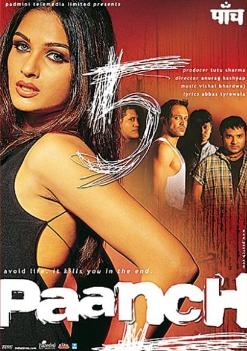
Paanch – not a formal review


At last I watched the full version of Paanch directed by Anurag Kashyap (a dear friend had sent a torrent link). All these days I’d seen only bits and pieces of it fearing an overdose of violence. It is the censored version with Adult certificate. I don’t understand what was the fuss all about for censors to block it all these years as more grotesque and sleazy stuff was passed without any qualms (Govinda-Karishma Kapoor were ruling the roost during that period if I’m not mistaken).


It isn’t a great film by any stretch of imagination (especially if you have seen Last Train to Mahakali and the avant-garde No Smoking). Here you feel the director seems to have begun the film with I wanna shock you attitude as you hear words daru, dum, stoned and few other synonyms of intoxication thrown in and even few expletives in Hindi and English.


The dark story of five struggling rock musicians going on killing spree in order to make money for decently recording demo album, which by the end becomes the story of a psychopathic freak Luke played by Kay Kay.


Kay Kay seems to be very frigid for the role. He is good in non performing (as a musician/stage performer) parts. But, the agility required a performer is missing (we just get a glimpse of it when he is shown climbing the flight of stairs running in the beginning).


The ultimate winner here is Abbas Tyrewala, the lyricist. I smile whenever I feel like scratching my …… Ghin Aati hai Khuja Mat :-P

12 January 2011

Interview with Director Ranjith Sankar

I first met Ranjith on the day his debut film Passenger released in Padma theatre. He was there to see the film along with Lal Jose. After the show I requested Lal Jose to introduce me to Ranjith. To my pleasant surprise Ranjith said “Hello Paresh Palicha I read all your reviews and respect your views the most”. Since that day we have been in constant touch.

Now, he is ready with his second film Arjunan Saakshi, which is releasing on 28th of this month. I mailed him a few questions and he replied; here I'm posting them.


How has Arjunan Saakshi shaped up? Now that shooting is over and you're into post production, are you happy what you're seeing on the Avid Machine, so to speak?

I am happy with Arjunan Saakshi when I see it now. It has shaped up more or less the way it was perceived. Thanks to all my actors and technicians who made it happen. Arjunan Saakshi is a result to good team work.

This is your second film and there seem to be lot of expectations, does that make you nervous or inspire you? Or to put little differently, How was the experience of making Arjunan Saakshi different from making Passenger?

Not nervous. But excited a bit to see how people react to AS.

AS was more responsible I must say. There were actors and technicians coming into the project since they believed in me. Also AS is more a “proper” commercial film in that aspect.I got to work with a stunt master and dance master. I made passenger in 38 days. AS took us 43 days. It was worth it looking at the technical finesse we have achieved.

You had spent lot of time with the script of Passenger before you could see it being actually made, but Arjunan Shakshi obviously took lot less time to fructify (even though the idea was in your head for many years), did you do anything differently while writing it or approaching actors?

Nothing. Actually for AS it was more easy since actors were willing to work with me even before a script was discussed. So I had to make sure I got my priorities right and get the most appropriate people for the parts. What I always felt it once you are convinced of the story its easy to convince anyone for that matter.

You continue to be software engineer even after becoming a successful filmmaker, how easy or though is carrying both worlds inside you? Do these worlds overlap sometimes?

At times yes,especially during the shooting days J. I am able to manage since I have a supportive management at office. I don’t plan way ahead. So happy the way it is now.

Here is another elaborate interview done by my friend Veeyen

Trailer of the film:


05 December 2009

Discovered John Malkovich and Reread Disgrace


I saw the film Disgrace after reading the review by Roger Ebert.

Anyone who has cared to read my blogger profile will know that Disgrace by J. M. Coetzee is one of my favourite books. I read it a few years back. It may be one of the first books that I read where the main character with negative traits is presented with empathy.

David Lurie, middle aged intellectual, teaching Romantic Poetry at the Technical University in Cape Town has a fling with one of his young students and is accused of sexual harassment by her. He accepts being guilty as charged but refuses to apologise or repent. He leaves his job and goes away to stay with his daughter Lucy who has a farm in the countryside.

The book is basically a commentary about the post-apartheid South African society in a flux represented by David, Lucy and Petrus, her help in the farm, who will soon become the co-owner of the farm according to the new arrangement.

The film starring John Malkovich feels like virtual transposing of the book onto the screen. His acting has our complete attention (before watching the movie I’d the image of Coetzee himself for David with snow-white beard, balding head, specs etc. but now it is John). Even most of the dialogues are taken from the book. Initially I was very excited seeing such a literal adaptation. But, after a while I felt something amiss in the film. So, I read the book again (this time I bought the book, the last time I’d borrowed from a library). In the film David appears to be arrogant, sinister, addicted to the pleasures of flesh, almost evil; without any remorse or regret.

The book on the other hand, has the advantage of an omnipresent third person narrator who lets us peek into the thought process, vulnerability and the sense of wrong doing, which makes him all too human. It is amazing that the writer presents the view point of someone at the extreme end of the spectrum without being judgmental (that to an utterly despicable in normal circumstances).
John Malkovich talks about working in Disgrace in this interview.

Some writers who hide away in universities only write about the arguments they have had or the students they have screwed. They stay in the universities because they want security. And you can’t be a writer if you want to be safe. You end up writing about the mortgage and the safe job.

A comment that Sir Vidia made without naming names.

An interview of Anna-Maria Monticelli who adapted the screenplay.

14 August 2009

Review of Malayalam film Ritu


The words like different or refreshing referring to a new film give you a niggling feel in your stomach in these despondent days when every second film seems to be a recycled version of an older one. And, you swing between hope and despair, when a filmmaker like Shyamaprasad (who is in the league of his own) promises to try something thing totally different from what he has done up till now. First, he says his new film is about youth of today, but not a campus film. Secondly, he gets an original script from a new writer Joshua Newtonn. Ritu: Seasons change… Do we? cannot claim to change the gloomy weather from which Malayalam Cinema is passing through. But, the effort seems to be worth lauding.

As anyone familiar with Malayalam films will be aware by now that this movie is about youngsters working in the Information Technology sector. It tells the story of three childhood friends who drift apart as grown ups. But, one of them clings on to the memories of good old days and wishes to work on their combined juvenile aspirations. This leads to the revelations about the hidden facades of their personalities and how it changes the equations of their relationships with others forms the crux of the story.

Sarat Varma (Nishan) returns from USA (where he was looking after the IT Company owned by his brother-in-law), to join a small Company starting an ambitious new project. He coaxes two of his childhood friends Sunny (Asif Ali) and Varsha (Rima Kallingal) to join him. They both are working in Infosys, Bangaluru and, adapted to the free lifestyle there. They reluctantly join him. It does not take long for Sarat to realise how his friends have drifted apart both in their attitude as well as in lifestyle. Varsha seems to be flirting with males on her phone and Sunny showing homosexual traits.

We may remember director Kamal’s Minnaminnikkoottam released last year with mainstream star cast including Meera Jasmine, Narein, Indrajith, Jayasurya and others boasted of IT as the backdrop. But, it was only cosmetic. Here Joshua tries to give somewhat realistic feel to the proceedings. Agreed that here also we have beer guzzling and head banging parties as they are thought to be the trademark of this field. Still, they are balanced out by lifelike situations of office politics, betrayals and other such thing.

If we have to register a complain in this department, it maybe with the characterisation is handled, Sarat is shown as goody-goody fellow who internalises every humiliation (insult maybe too harsh a word) he gets from his friends (though it is evened out with his grudge against father for not allowing him to pursue literature in college), we expect him to explode or even simply ask his best friends about the reason for their aloofness. Again, it also perpetuate the myth that females working in BPO/IT sector become sex fiends. Coming to Sunny’s deviant sexuality, there are subtle references for the reason of him being a gay, having an abusive father can be one such attribute. This can also be the base of the negative aspects in his personality; from being an innocent shoplifter in his younger days to cheating his employers for millions.

The socialist tirade that sprouts in between jars. IT Parks and other such places are presented as symbols of capitalist dystopia that the poor are robbed of their land and provided menial jobs in compensation while the rich loot and milk the place dry.

The film maintains high standard as far as the look and the feel is concerned. Shamdat captures the past (mostly outdoors, a lakeside hangout of the three chums) in hazy form giving it a mushy music video feel. While the present is caught in sharp brightness as the CFL lit corridors of an IT conglomerate.

The cast consisting of newcomers succeed in doing a proficient job. The three main characters exude confidence that defies their inexperience. Nishan as the sensitive wannabe writer Sarat, the feline quality in Asif as Sunny always alert looking over his shoulder for any lurking danger and Rima prove that they are here to stay.

Ritu is a worthwhile experiment by seasoned director Shyamaprasad with a predominantly new team that does not disappoint.

An edited version of this review has appeared in Rediff.